Pages

Monday, 17 April 2017

More from Nythe Pool

A bit quieter on the warbler front with just 2 Blackcap, 2 Chiffchaffs and 1 Willow Warbler singing this afternoon.

There are now 4 Moorhens on the pool, with 2 drake Mallard.

Butterflies seen were: 7 Speckled Woods, 3 Holly Blues and 5 Orange-tips (1 male and 4 female).

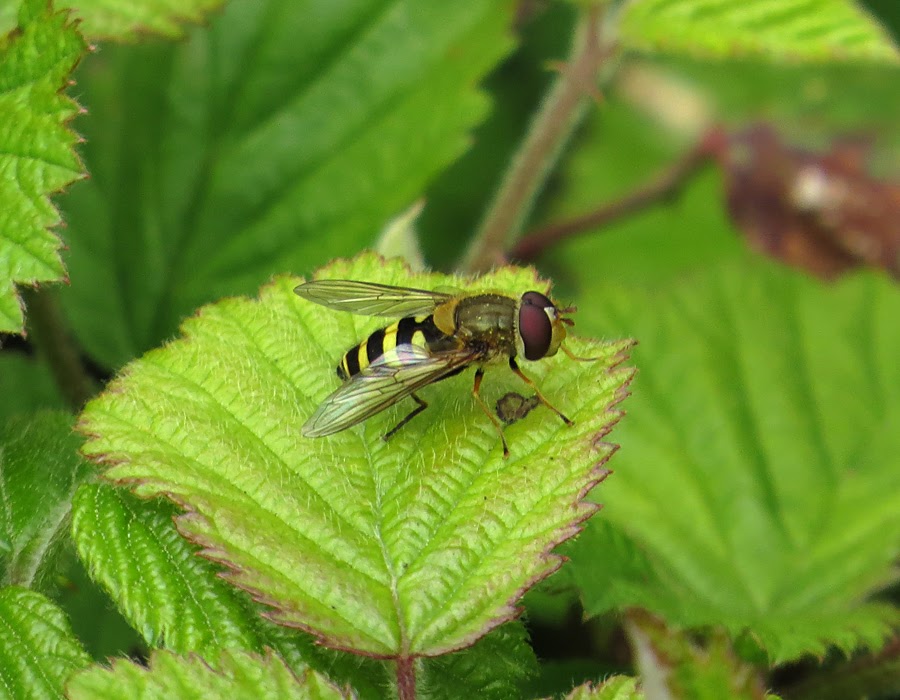
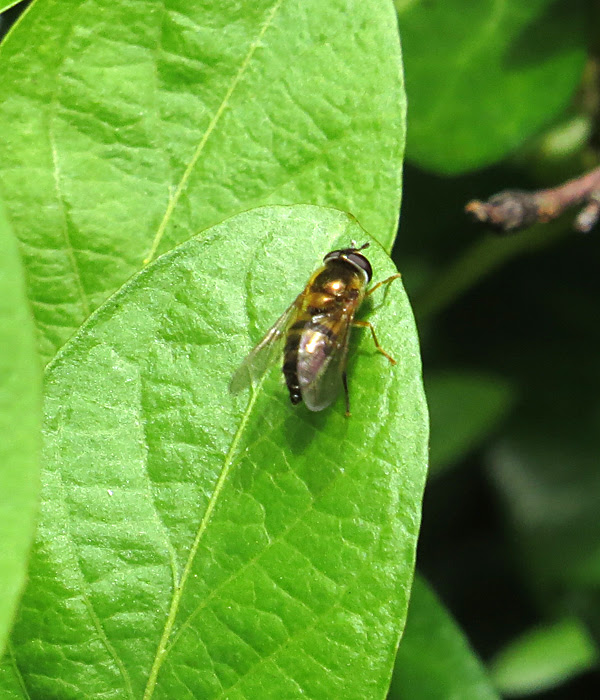
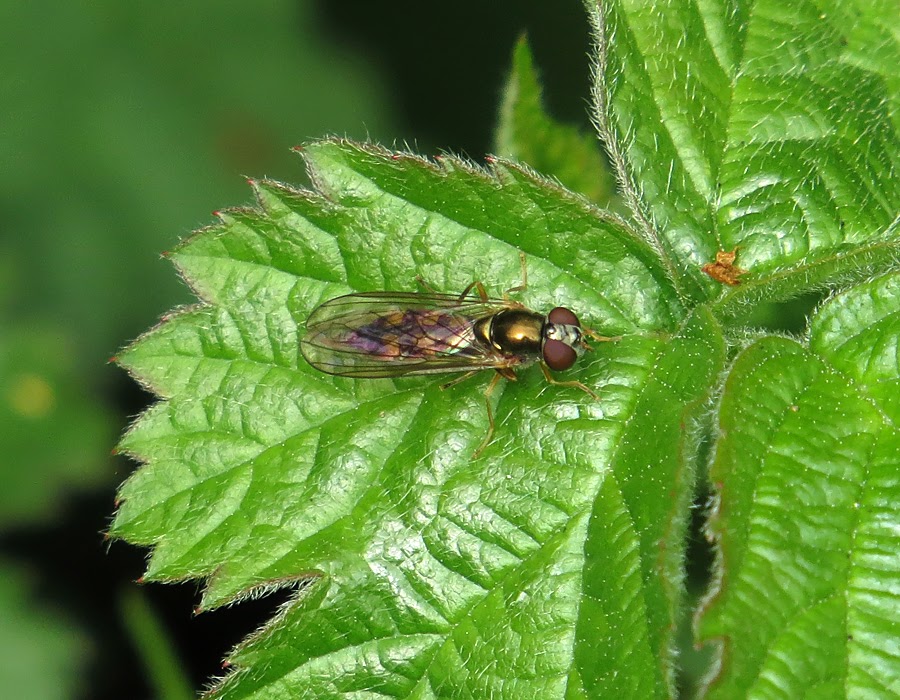
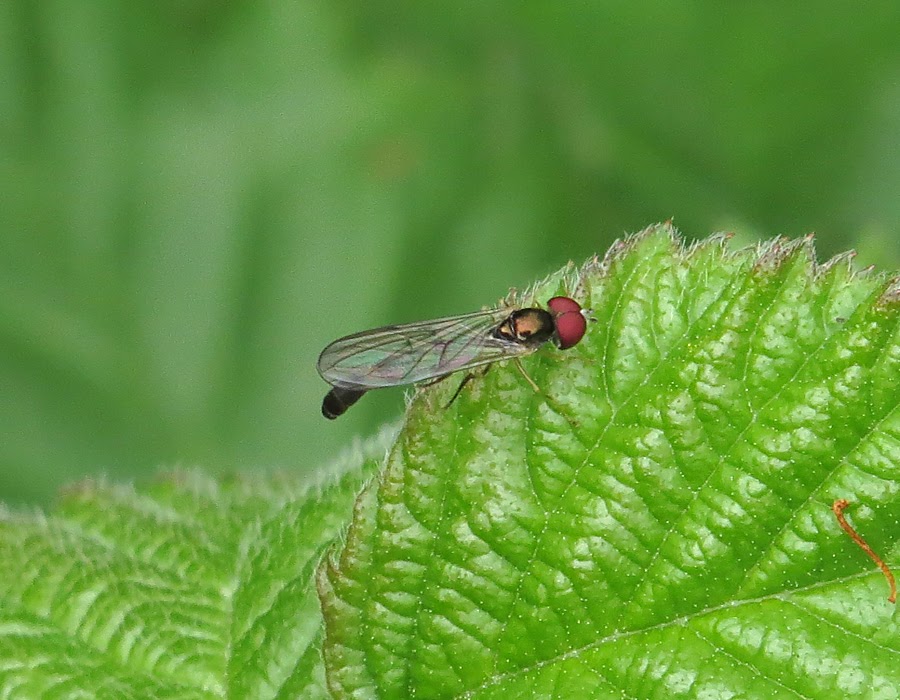
Still a lot of hoverflies about with Syrphus ribesii, Epistrophe eligans, Platycheirus albimanus, Melanostoma scalare, Baccha elongata and a Eupeodes luniger.


Not many bees about, but I did come across both Common Carder, the Andrena carantonica mining bee again and another which has been narrowed down to being either a Nomada panzeri, Nomada flava or Nomada ruficornis. Just to confuse things I actually had another nomada which I thought was one of the 3 mentioned above, which turns out to be a male Nomada leucophthalma (which is what thought the other one was). All good fun.

Other insects seen were 2 Harlequin Ladybirds, 1 Dark-edged Bee-fly, crane flies sp., Golden Dung-flies and a few flies about with a few to ID!

Birds recorded were: 2 Mallard, 4 Moorhen, 3 Lesser Black-backed Gull, Wood Pigeon, 1 Collared Dove, Dunnock, Robin, Blackbird, 1 Song Thrush, 2 Blackcap, 2 Chiffchaff, 1 Willow Warbler, 2 Goldcrest, 3 Long-tailed Tit, Great Tit, Blue Tit, Wren, Magpie, Carrion Crow, House Sparrow, Chaffinch, Goldfinch and a Bullfinch.

Here are a few images from today:

A bit of hierarchy going on here between two drake Mallard

One of several Speckled Woods here this afternoon

A Holly Blue

A male Orange-tip. The underwings are so different from the upper wings. Unfortunately I couldn't get a shot of the wings open.
In complete contrast the female Orange-tip

A Marmalade Hoverfly - Episyrphus balteatus. My first of the year.

This interesting looking wasp, is in fact a Nomada leucophthalma.
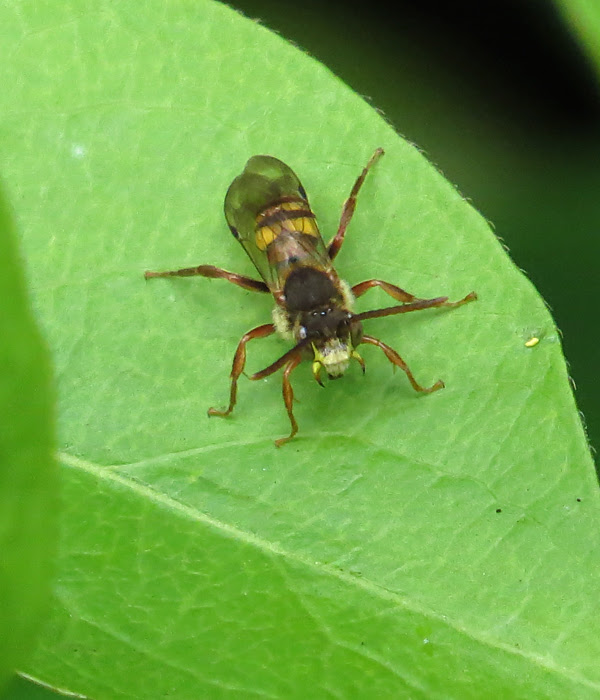
Initially I thought this was the same as the Nomada leucophthalma above but it turns out that it is totally different and could be one of 3 species of nomada and is either Nomada panzeri, Nomada flava or Nomada ruficornis
A colourful bee bee never the less.....
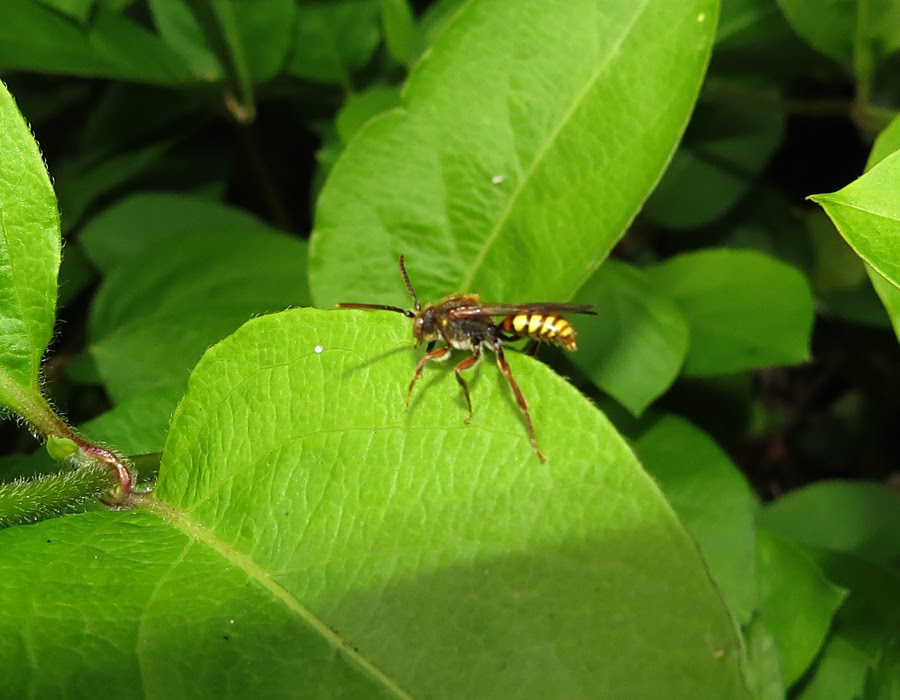
........and a side profile. Very wasp-like in appearance.

I'm going to say another Syrphus ribesii, however this particular individual looks slightly different from others I have come across. Another one to ID properly.

Another Epistrophe eligans

Hoverfly, Eupeodes luniger

........and another view head on.
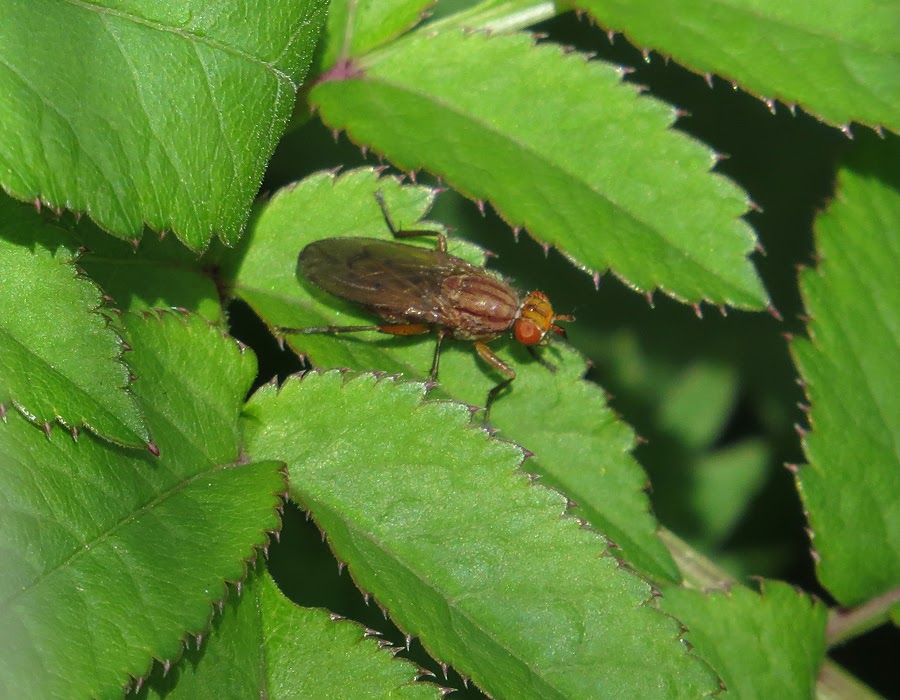
Scathophaga stercoraria, commonly known as the Yellow Dung Fly or the Golden Dung Fly

and mating.

Harlequin Ladybird. Two seen today and my first for Spring.

Warblers Down On The Farm

Sadly I missed my visit to Lotmead Farm last month, but I managed an early visit there this morning. Sunrise was 6:07am this morning, but I was there well before that and on my way to the Reserve pool for 5:15am.

En route from the car park to the pool I managed 15 Robins, 3 Blackbirds, 2 Song Thrushes and several Wrens all singing as the sky started to lighten up.

At the pool I could hear a Little Grebe calling out and later watched a pair swimming together at the far end of the pool. Just the 1 duckling with a pair of Mallard on the water and later 2 drakes joined them.

Also on the pool a pair of Canada Geese, with one bird sporting an Orange neck band with the letters HJ printed on it. The last time this bird was seen was at Inglesham on 19 Feb 16 when it was with 45 other geese. This bird came from the Cotswold Water Park and was part of a research project run by the University of Exeter and Cotswold Water Park. More Info on the CWP Blog Canada Goose Research Project Here.

Other birds of interest were the number of warblers singing with 5 Blackcaps, 6 Chiffchaff and 2 Willow Warblers.

Overhead I had my first Greylag Goose for my patch list and other over-flying birds included 2 more Canada Geese, quite a few gulls, mainly Lesser Black-backed and I also had a Mistle Thrush over the farm.

In the trees at the west end of the pool, there was a raptor of some sort. I never saw it but it called several times whilst I was there. We shall never know!

And a single Swallow flew across the pool at 6:20am

As I left at 7:20am I came across a Roe Deer at close quarters. When he picked up my scent he was off......

The pair of Canada Geese with one sporting an orange neck band with HJ.

A fly-by snapshot of my first Greylag Goose here

One of 6 very vocal Chiffchaffs at Lotmead.

And a magnificent looking stag Roe Deer, posing very well for me until.......

..........he caught wind of me and he was off!!!

Birds Recorded here this morning were: 2 Little Grebe, 1 Mute Swan, 1 Greylag Geese, 4 Canada Geese, 5 Mallard (1 pair, 2 drakes and 1 duckling), 5 Pheasant, 3 Moorhen, 1 Coot, 4 Black-headed Gull, 3 Herring Gull, 12 Lesser Black-backed Gull, Wood Pigeon, 1 Green Woodpecker, 1 Skylark, 1 Swallow, Dunnock, 15 Robin, 3 Blackbird, 2 Song Thrush, 1 Mistle Thrush, 5 Blackcap, 6 Chiffchaff, 2 Willow Warbler, 4 Long-tailed Tit, Great Tit, Blue Tit, 1 Treecreeper, 8 Wren, 3 Magpie, Rook, Carrion Crow, Jackdaw, 1 Starling, House Sparrow, Chaffinch, Goldfinch and a Greenfinch.

Also seen a stag Roe Deer.

Sunday, 16 April 2017

Pool Side

An early afternoon walk around Nythe Pool today and with that biting wind it was a bit of a struggle to find any insects.

However in the usual hot spots there were several Syrphus ribesii, a few Epistrophe eligans, Platycheirus albimanus, a Melanostoma scalare and a Baccha elongata hoverflies.

Also another mining bee, possibly Andrena carantonica or Andrena bicolor. I also came across a dead St. Mark's Fly (Bibio marci) and a few flies and another hoverfly to ID. Well I think its a hoverfly!!

Close to the few Hawthorns, now coming into bloom, I counted 8 Speckled Woods. Around the rest of the pool just the 1 Holly Blue and 3 Orange-tips (a female and 2 males).

The bird highlights were 4 Blackcaps (3 males singing and a female), 1 Willow Warbler and 3 Chiffchaff. Just the 2 drake Mallard on the pool and down to one pair of Moorhen.

Here are a few images from today:

The Weir Pool

A Speckled Wood.......

.......and another warming itself on the ground.

A Holly Blue on a bramble

Either an Andrena carantonica or Andrena bicolor mining bee

So many Syrphus ribesii here.

Epistrophe eligans and that "copper" coloured thorax

Platycheirus albimanus hoverfly

Melanostoma scalare (Chequered Hoverfly)

A St. Mark's Fly, Bibio marci. So called because they emerge around St Mark's Day on 25th April every year. Unfortunately this one was early and died!!

Baccha elongata hoverfly......

.....same as above slightly lower view point.

A lot of flies sp. warming themselves on the bricks by the bridge that crosses the stream

A fly with brown spots where the wings join the its body. I know what this is, but the name escapes me at the moment. I will remember.

Thursday, 13 April 2017

Nythe Pool gets a Facelift

I guess you could say its my legacy, with the clean up programme that is now going ahead at Nythe Pool. It was 2 years ago that I contacted the Environment Agency (EA) and asked if it would possible to clean the pool. And today after 2 weeks of setting up the Site, the amphibious JCB digger was in the pool late morning, clearing the sludge from the weir pool.

The pool is actually known to the EA as Eldene Balancing Pond, but back in the 60's, local residence use to call it Nythe Bog. Since then though it has been widened, deepened and in some parts straightened, to help alleviate the run off water from the estates that have grown up around it over the years.

The pool since I moved to Swindon 8 years ago has deteriorated rapidly, with Microwaves, TVs, Computer Monitors, Settees, Cable Drums, Bikes, Buggies, Prams, Child Car Seats, Wheelie Bins, you name it been dumped in the water. It is just deplorable that a minority of people feel the need to dump their rubbish, in hedges, fields, woods, ponds, rivers without any thought as to effect it has on wildlife or in this case keeping a waterway clear to stop the flooding of local properties.

As I say the real work started today and though 3 - 4 weeks has been set it, it really is dependant on how long the budget lasts to cover fuel costs etc. Mind you the digger today was making good headway, so hopefully they will be able to clean a good percentage of the pool.

Here are a few videos and Images from today:


The Weir Pool is cleaned and deepened.

Moving on from the Weir Pool the digger starts to clear the channel along the south bank.


Thursday, 23 March 2017

Portland Revisited

It was back to Portland again this afternoon to measure up the Cottage for our impending move. En route from Swindon, Dawn managed a Short-eared Owl, Little Egret and a Green Woodpecker with here beady eyes. Me I saw lots of Buzzards as I was driving.

On the island I took a slight detour to the Pulpit and despite the howling gale and torrential rain I managed 2 Gannets, a Cormorant, 2 Great Black-backed Gulls, 30+ Meadow Pipit, a single Rock Pipit, 4 Herring Gull, Magpie and 2 Carrion Crow. Well it was pretty miserable weather!

The Bill

A very cold Dawn stood by the Trinity House obelisk

 The boat crane near the Bill

Gannet

Gannet

Friday, 24 February 2017

A Day at the Seaside

Had a great day out at Weymouth and Portland. This was a non-birding trip, but I managed to get a few newbees to my 2017 bird list: Brent Geese at the Fleet, Mediterranean Gull at Radipole car park (where else!) and Great Black-backed Gull & Rock Pipit on Chesil Beach. I even managed a pair of Grey Partridges near Stonehenge.

Birds Recorded were: Cormorant, Mute Swan, Mallard, Little Egret, Brent Geese, Buzzard, Kestrel, Black-headed Gull, Mediterranean Gull, Herring Gull, Lesser Black-backed Gull, Great Black-backed Gull, Wood Pigeon, Collared Dove, Rock Pipit, Pied Wagtail, Dunnock, Robin, Blackbird, Great Tit, Blue Tit, Wren, Magpie, Rook, Carrion Crow, Jackdaw, Starling and House Sparrow.

Thursday, 9 February 2017

Mute Swan - Lotmead Farm 6 Feb 17

As a follow up to my visit to Lotmead Farm on Monday 6 Feb, I sent an email to the Euring Website Here with regards to the Mute Swan with the orange Ring R7R on its left leg. I'm glad to say I have had some feedback from the ringer David Stone who has been studying swan populations in the Hampshire.

Here is David's reply:

"Many thanks for your report of the colour-ringed swan R7R at Lotmead Farm, which has been forwarded to me by WWT.  From your Blogspot I can see that the ring is orange and therefore one of mine used in my long-term study of of the swan population in the Hampshire Avon catchment.

R7R was ringed on 23 Jul 2016 as a first year bird (i.e. hatched 2015) in a moulting flock at Great Durnford (in the Woodford valley N of Salisbury, SU132377) and was sexed on cloacal examination as a female.

There were no subsequent sightings until your own.  This is an interesting movement, as most of the swan population in the northern end of the Avon remain within the catchment.

Occasionally, however, individuals turn up on the Thames, Cotswold Water Park or Somerset Levels.

If you come across this, or other orange-ringed swans in the Swindon area then do email me direct.  It will be interesting to learn if R7R does stay to breed, although the pair are perhaps not quite mature enough. Females usually start to breed at 3 years old and males at 4 years. Regards David"